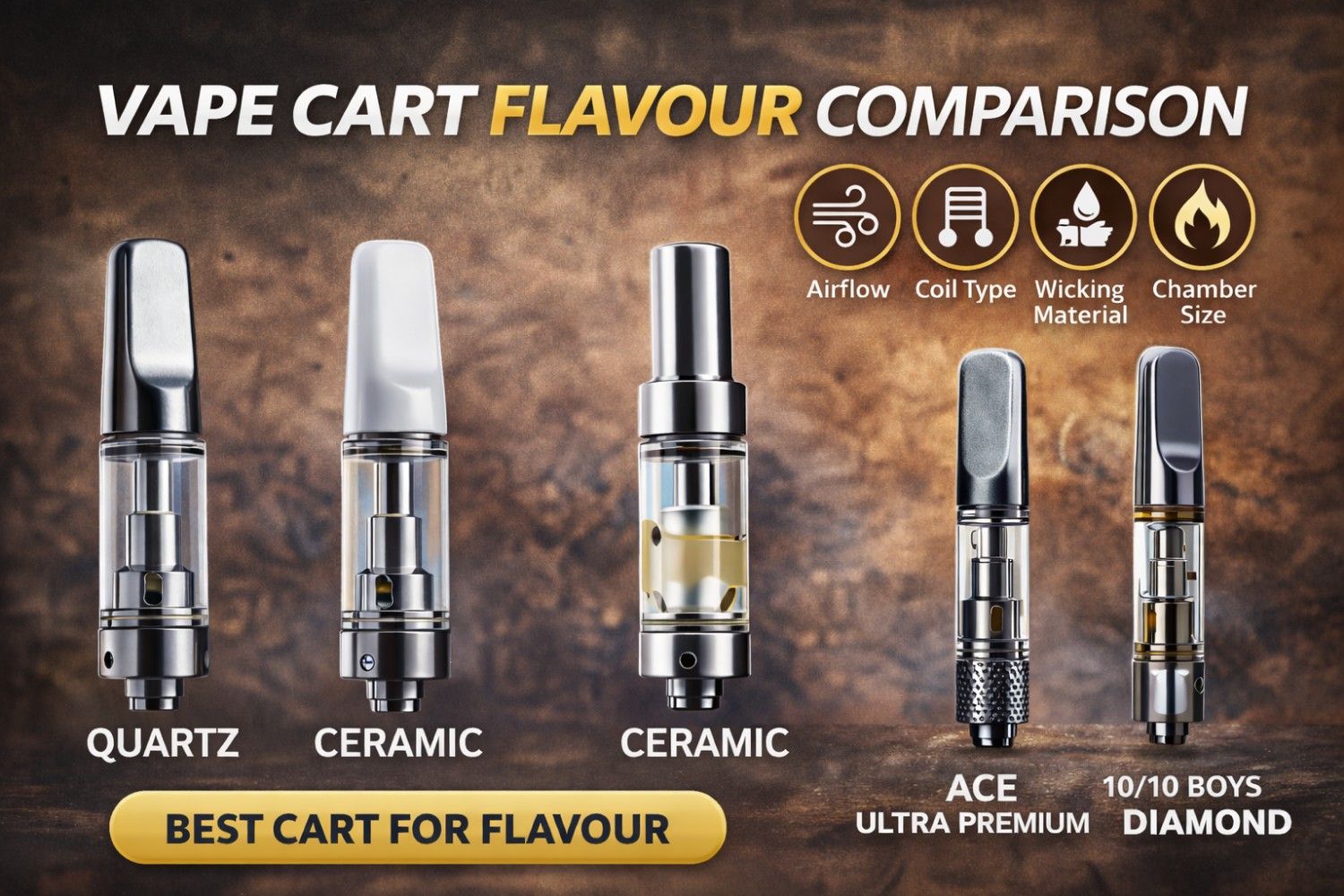
When people ask “which cart is best for flavour?”, they’re usually shown product names but not the real reasons why some vape carts taste richer, cleaner, and more consistent than others.
Flavour isn’t just about what’s inside the cart. It’s about how the cart is built.
In this guide, we break down the exact factors that control flavour performance in vape carts – airflow design, coil type, wicking material, and chamber size—so you can confidently choose the best cart for flavour, whether you’re a casual user or a true flavour chaser.
This article is especially useful if you’re comparing empty carts for refilling or evaluating premium flavour carts designed for maximum taste.
What Determines Flavour in a Vape Cart?
Flavour quality comes from how efficiently a cart:
- Heats the liquid
- Delivers vapour to your palate
- Preserves volatile flavour compounds
The four biggest contributors are:
- Airflow
- Coil type
- Wicking material
- Chamber size
If even one of these is poorly designed, flavour suffers.
Airflow: The Foundation of Flavour Delivery
Airflow controls how vapour moves from the coil to your mouth. Too much air dilutes flavour; too little overheats the coil.
Restricted vs Open Airflow
|
Airflow Type
|
Flavour Result
|
|
Tight / Restricted
|
Stronger, more concentrated flavour
|
|
Wide / Open
|
Cooler vapour, weaker flavour
|
Flavour-focused carts typically use precision airflow channels that balance vapour density with smooth draw resistance.
This is why many users searching for the best cart for flavour like 10/10 Boys Premium Vape Pen prefer carts with controlled airflow rather than wide-open designs.
Coil Type: Where Flavour Is Created
The coil is the heart of flavour production. Different coil materials and designs dramatically change taste.
Common Coil Types Compared
|
Coil Type
|
Flavour Quality |
Notes |
|
Ceramic Coil
|
⭐⭐⭐⭐☆
|
Clean, smooth, long-lasting
|
|
Quartz Coil
|
⭐⭐⭐⭐⭐
|
Sharp, intense flavour
|
| Metal Wire |
⭐⭐☆☆☆ |
Faster burn-off, muted taste
|
Ceramic and quartz coils are preferred in premium flavour carts because they heat evenly and preserve delicate flavour notes. Many premium flavour carts on the market use advanced ceramic cores specifically designed to avoid metallic aftertaste.
Wicking Material: Flavour Consistency Over Time
Wicking material controls how liquid feeds into the coil. Poor wicking leads to dry hits, burnt taste, or uneven flavour.
Best Wicking Materials for Flavour
- High-grade ceramic – clean taste, slow degradation
- Organic cotton blends – rich flavour but wears faster
- Synthetic fiber – inconsistent flavour (not ideal)
For refillable and empty carts, ceramic-based wicking systems are usually recommended for users who care most about flavour purity.
This is why many refill users choose flavour-oriented empty carts designed specifically for smooth, consistent wicking.
Chamber Size: Small Detail, Big Flavour Impact
Chamber size affects vapour concentration and heat retention.
Small vs Large Chambers
|
Chamber Size
|
Flavour Effect |
|
Smaller Chamber
|
Stronger, more direct flavour
|
| Larger Chamber |
Cooler vapour, lighter taste
|
Flavour-focused carts often use compact chambers that keep vapour dense and aromatic before it reaches your mouth.
If flavour is your top priority, avoid oversized chambers designed only for cloud production.
Putting It All Together: What Makes the Best Cart for Flavour?
The best cart for flavour combines:
- Controlled airflow
- Ceramic or quartz coil
- Clean, stable wicking material
- Compact chamber design
This combination allows flavour compounds to vaporise evenly without overheating or dilution.
That’s why many flavour lovers gravitate toward premium flavour carts built with precision rather than mass production shortcuts.
Flavour-Oriented Products vs Standard Carts
Not all carts are designed equally.
Flavour-Focused Carts
- Prioritize taste clarity
- Use ceramic or quartz coils
- Deliver consistent flavour from first puff to last
Standard / Budget Carts
- Focus on output or cost
- Use generic metal coils
- Flavour fades quickly
High-end flavour products like liquid diamond or ultra-refined blends benefit significantly from better cart hardware, because subtle flavour notes are preserved rather than burned off.
Choosing the Right Cart for Your Flavour Preferences
Ask yourself:
- Do you prefer strong, bold flavour or smooth subtle notes?
- Are you refilling or using pre-filled products?
- Do you value longevity or peak flavour intensity?
Quick Decision Guide
- Maximum flavour intensity: Ceramic or quartz coil, tight airflow
- Smooth all-day flavour: Ceramic wick, medium airflow
- Refill use: High-quality empty carts designed for flavour
Common Flavour Mistakes to Avoid
- Using high power on flavour carts
- Letting carts run nearly dry
- Storing carts in heat or sunlight
- Mixing flavours without cleaning
These mistakes destroy flavour faster than poor hardware.
Conclusion
Flavour isn’t accidental – it’s engineered.
By understanding how airflow, coil type, wicking material, and chamber size work together, you can confidently choose the best cart for flavour instead of guessing based on branding alone.
Whether you’re refilling or selecting a premium flavour cart, focusing on cart design not just liquid makes all the difference.
If flavour matters to you, start with the cart.
FAQs
Which cart gives the best flavour?
Carts with ceramic or quartz coils, controlled airflow, and compact chambers deliver the best flavour.
Does airflow really affect flavour?
Yes. Too much airflow dilutes vapour; restricted airflow concentrates flavour.
Are ceramic carts better for flavour?
Generally, yes. Ceramic provides cleaner, more consistent flavour over time.
Do empty carts affect taste?
Absolutely. Poor-quality empty carts mute flavour even with premium liquid.
What’s better for flavour: big clouds or tight draw?
A tighter draw almost always delivers stronger flavour.
Can flavour fade before the cart is empty?
Yes, especially with metal coils or improper power settings.
Should flavour carts be stored differently?
Yes. Keep them cool, upright, and sealed to protect flavour compounds.