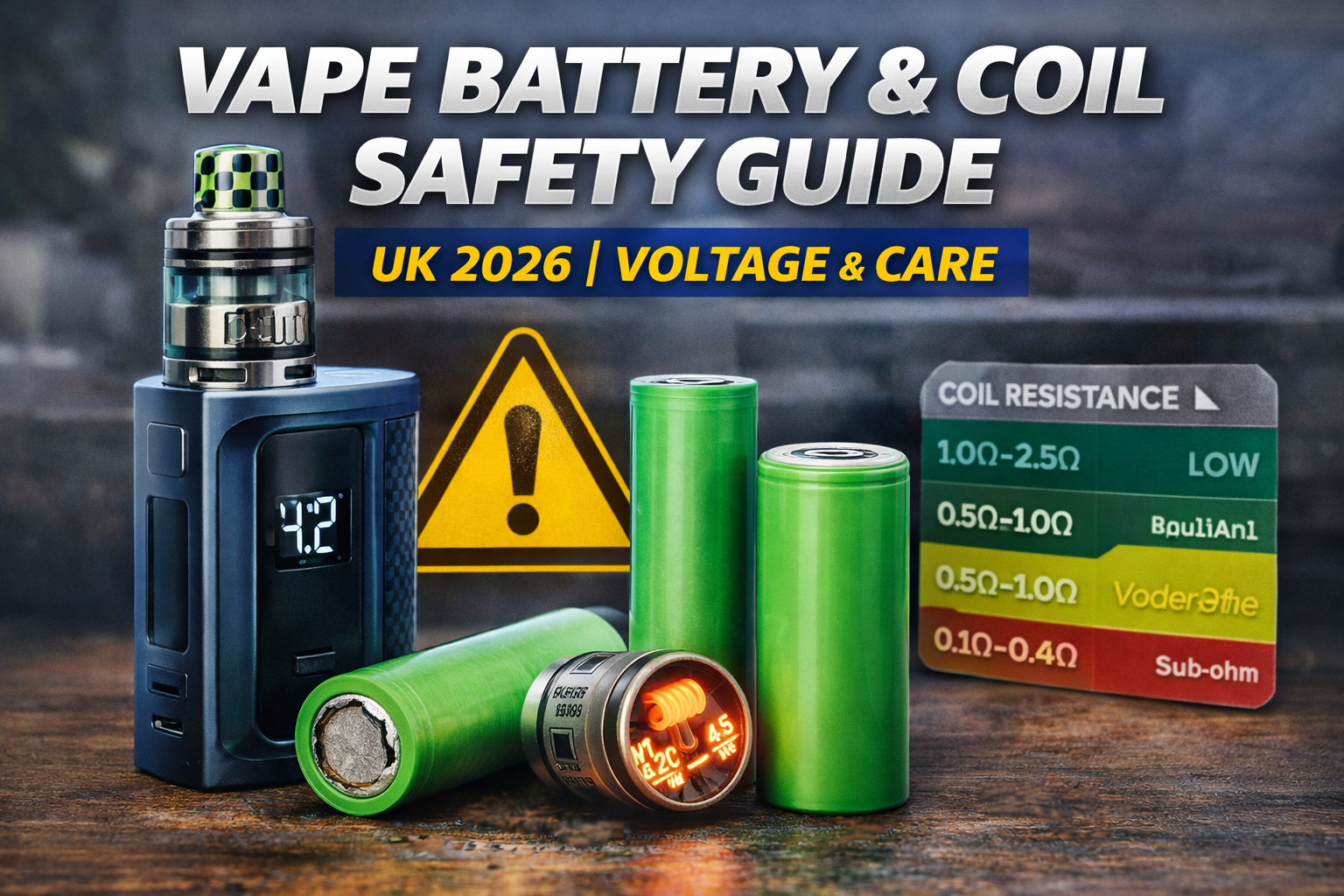
Vape safety isn’t just about the device you buy – it’s about how you use it every day. In the UK, most vape-related issues come down to two components: batteries and coils. Incorrect voltage, poor charging habits, or worn coils can lead to burnt hits, device failure, or in rare cases, serious safety risks.
This complete guide explains how vape batteries and coils work, how to use them safely, and how to avoid common mistakes whether you’re a beginner or an experienced vaper in 2026.
Why Battery & Coil Safety Matters
Your vape battery controls power delivery, while the coil controls heat and vapour production. When these two are not properly matched or maintained, problems start.
Good battery and coil safety helps:
- Prevent overheating and battery damage
- Avoid burnt coils and harsh hits
- Extend device lifespan
- Maintain consistent flavour and vapour
- Reduce safety risks during charging and use
Most issues are preventable with the right knowledge.
Understanding Vape Batteries (Simple Explanation)
Types of Vape Batteries
- Built-in batteries – Found in pod systems and vape pens
- Removable batteries – Common in box mods (e.g. 18650, 20700, 21700)
What Vape Batteries Do
- Supply power to the coil
- Regulate voltage or wattage
- Control heat generation
Battery stress happens when the device is pushed beyond safe limits.
Vape Battery Safety Rules (UK Best Practices)
1. Use the Correct Charger
Always use the cable or charger recommended for your device. Cheap or fast chargers can cause overheating and shorten battery life.
2. Avoid Overnight Charging
Charging overnight increases battery degradation. Unplug once fully charged whenever possible.
3. Watch for Warning Signs
Stop using the device if you notice:
- Excessive heat
- Swelling or deformation
- Rapid battery drain
- Burning smells
These are signs of battery failure.
4. Store Batteries Safely
- Keep away from heat and sunlight
- Never store loose batteries in pockets with keys or coins
- Use protective battery cases
Vape Voltage, Wattage & Ohms Explained
Understanding voltage and resistance is key to coil safety.
What Is Coil Resistance (Ohms)?
Coil resistance controls how much power is drawn from the battery.
- Higher ohms (1.0Ω+) → Lower power, cooler vape
- Lower ohms (<1.0Ω) → Higher power, warmer vape
Voltage vs Wattage
- Voltage = electrical pressure
- Wattage = total power output
Most modern devices use wattage control, which is safer and more consistent.
Safe Voltage & Wattage Guidelines
General Safety Ranges
- High-resistance coils: 8–15W
- Mid-range coils: 15–30W
- Low-resistance coils: 30–60W (device-dependent)
Always follow the coil manufacturer’s recommended range printed on the coil.
Running coils too hot causes:
- Burnt cotton
- Short coil lifespan
- Overstressed batteries
Coil Safety: How to Use Coils Correctly
Always Prime New Coils
Priming prevents dry hits and burnt cotton.
How to prime:
- Apply e-liquid directly to cotton ports
- Fill the tank
- Wait 5–10 minutes before vaping
- Start at the lowest wattage
Replace Coils on Time
A worn coil can damage the device and ruin flavour.
Replace if you notice:
- Burnt or metallic taste
- Reduced vapour
- Gurgling or leaking
- Darkened e-liquid
Trying to “push through” a burnt coil is unsafe and ineffective.
Common Battery & Coil Mistakes to Avoid
- Using coils outside their rated wattage
- Chain vaping without cooling breaks
- Charging near heat sources
- Using damaged batteries
- Mixing incompatible coils and devices
These habits significantly increase risk.
Battery Safety with Different Vape Devices
Pod Systems
- Lower power, safer for beginners
- Avoid overcharging
- Replace pods regularly
Vape Pens
- Simple but still need proper charging
- Don’t use damaged USB ports
Box Mods
- Use matched battery pairs
- Check battery wraps for damage
- Monitor resistance before firing
Battery Safety with Different Vape Devices
Pod Systems
- Lower power, safer for beginners
- Avoid overcharging
- Replace pods regularly
Vape Pens
- Simple but still need proper charging
- Don’t use damaged USB ports
Box Mods
- Use matched battery pairs
- Check battery wraps for damage
- Monitor resistance before firing
UK Climate & Vape Safety
Temperature changes affect batteries and coils.
Cold Weather
- Thicker e-liquid
- Slower wicking
- Increased dry-hit risk
Hot Weather
- Faster battery degradation
- Increased leaking
- Higher overheating risk
Store devices at room temperature whenever possible.
How to Store Batteries & Coils Safely?
Battery Storage
- Use protective cases
- Store in a cool, dry place
- Never expose to water or metal contact
Coil Storage
- Keep unused coils sealed
- Store away from heat and humidity
- Check compatibility before installation
When to Replace vs Repair ?
Replace the battery if:
- It no longer holds charge
- It overheats regularly
- It shows physical damage
Replace the coil if:
- Flavour degrades
- Vapour drops
- Burnt taste appears
Safety always comes before cost-saving.
Conclusion
Vape battery and coil safety isn’t complicated, but it does require attention. Use the correct voltage, prime coils properly, charge responsibly, and replace worn components early.
By following these safety principles, UK vapers in 2026 can enjoy better flavour, longer device life, and a safer overall vaping experience — without unnecessary risks.
If you’d like, I can also:
- Add internal links to related vape guides
- Create a battery safety checklist for product pages
- Optimize this guide for featured snippets & voice search
FAQs – Common Questions
What voltage is safe for vaping?
Safe voltage depends on the coil and device. Always stay within the coil’s recommended wattage range.
Can a vape battery explode?
Rare, but possible if misused. Most incidents involve damaged batteries or improper charging.
Why does my coil burn so fast?
Common causes include high wattage, poor priming, chain vaping, or thick e-liquid.
Is it safe to use a vape while charging?
It’s best avoided. Charging and vaping simultaneously stresses the battery.
How long do vape batteries last?
Built-in batteries typically last 6–12 months. Removable batteries may last longer with proper care.
Should I lower wattage in cold weather?
Yes. Cold thickens e-liquid, increasing dry-hit risk at high wattage.
Are cheap coils unsafe?
Poor-quality coils may have inconsistent resistance and cotton quality, increasing burn risk.